
In cocoa and chocolate processing, certain steps require adjusting acidity, improving fermentation, controlling pH, and stabilizing the flavor of cocoa beans. For this, the industry uses a specific, safe, food-approved lime type.
The lime used in cocoa or chocolate processing is Food-Grade Calcium Carbonate (CaCO₃) and Food-Grade Hydrated Lime (Calcium Hydroxide) — depending on the manufacturing step.
Food-grade calcium carbonate is commonly used during cocoa powder processing, while food-grade hydrated lime is sometimes used during cocoa fermentation to control acidity and microbial balance.
Both are safe, edible, and permitted in food applications.
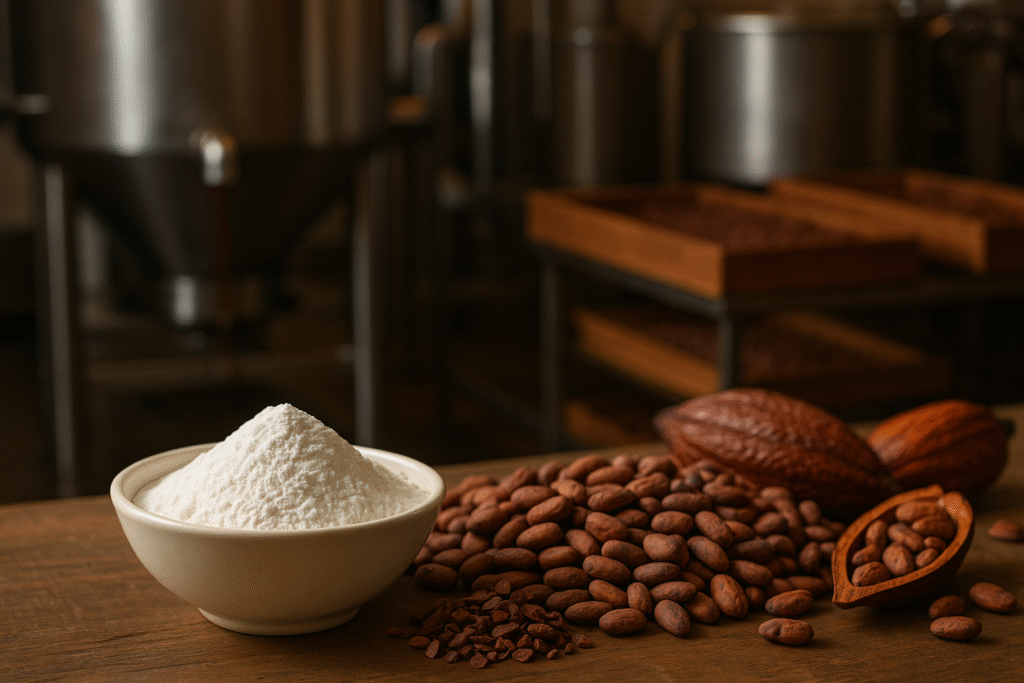
During cocoa processing, the acidity level can rise due to fermentation by-products.
Food-grade calcium carbonate helps neutralize this acidity, making the cocoa flavor smoother and less bitter.
In some bean fermentation batches, small amounts of food-grade hydrated lime are used to balance pH, helping good microbes grow and reducing unwanted acidity.
This results in:
| Lime Type | Scientific Name | Food Safe? | Used in Cocoa? | Purpose |
|---|---|---|---|---|
| Food-Grade Calcium Carbonate (Most Common) | CaCO₃ | ✔ Yes | ✔ Yes | pH control, acidity reduction in cocoa powder |
| Food-Grade Hydrated Lime | Calcium Hydroxide (Ca(OH)₂) | ✔ Yes | ✔ Yes (limited use) | Fermentation pH correction |
Food-Grade Calcium Carbonate and Food-Grade Hydrated Lime.
To reduce acidity and improve flavor during fermentation or cocoa powder processing.
Yes — only food-grade lime is allowed.
It reduces sourness and bitterness, improving final flavor.
No. Quick lime is unsafe for food.
Mostly in cocoa powder neutralization and cocoa bean fermentation.
This will close in 30 seconds