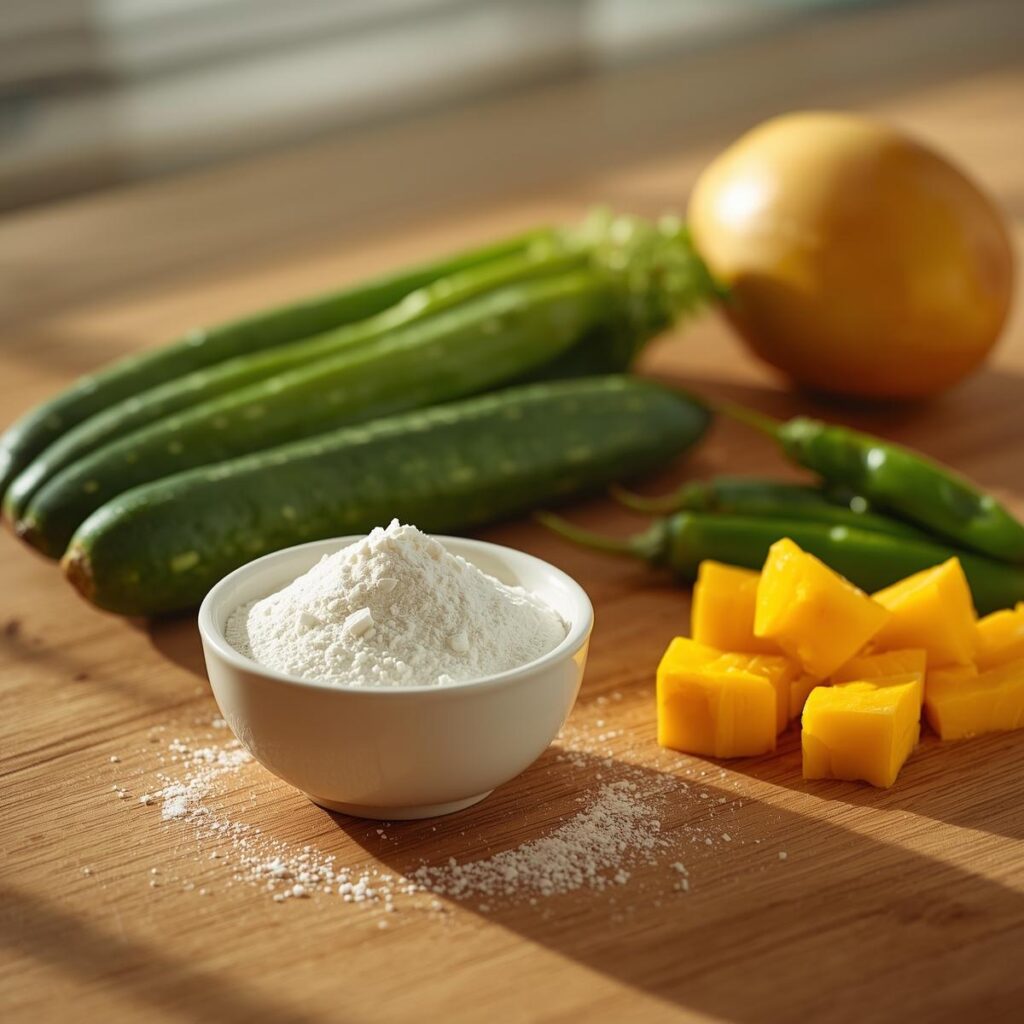
Lime has been used for centuries in traditional food preservation. But not all types of lime are safe or suitable for food. Only one specific type is approved and widely used in food preservation processes.
The lime used in food preservatives is Food-Grade Hydrated Lime (Calcium Hydroxide). It is also known as Food-Grade Slaked Lime, Pickling Lime, or Khaane Wala Chuna (but only food-grade).
This purified lime helps maintain the texture of vegetables, supports safe pH levels, and assists in traditional food preservation methods.
Why Food-Grade Hydrated Lime Is Used in Food Preservation
Helps maintain firmness and crispness in vegetables
Stabilizes pH levels in food
Supports long-term preservation in pickles and fermented foods
Used traditionally for preserving mango, chilli, and cucumber
Safe for consumption (only when food-grade)
Prevents softening during soaking and brining
Enhances texture in certain preserved foods
How Lime Works in Food Preservation
Food-grade hydrated lime strengthens vegetable cell walls, making them firm and crisp. It also stabilizes the acidity (pH) of certain food items, helping slow down spoilage. This is why lime is commonly used in making pickles, preserved vegetables, and some traditional fermented foods.