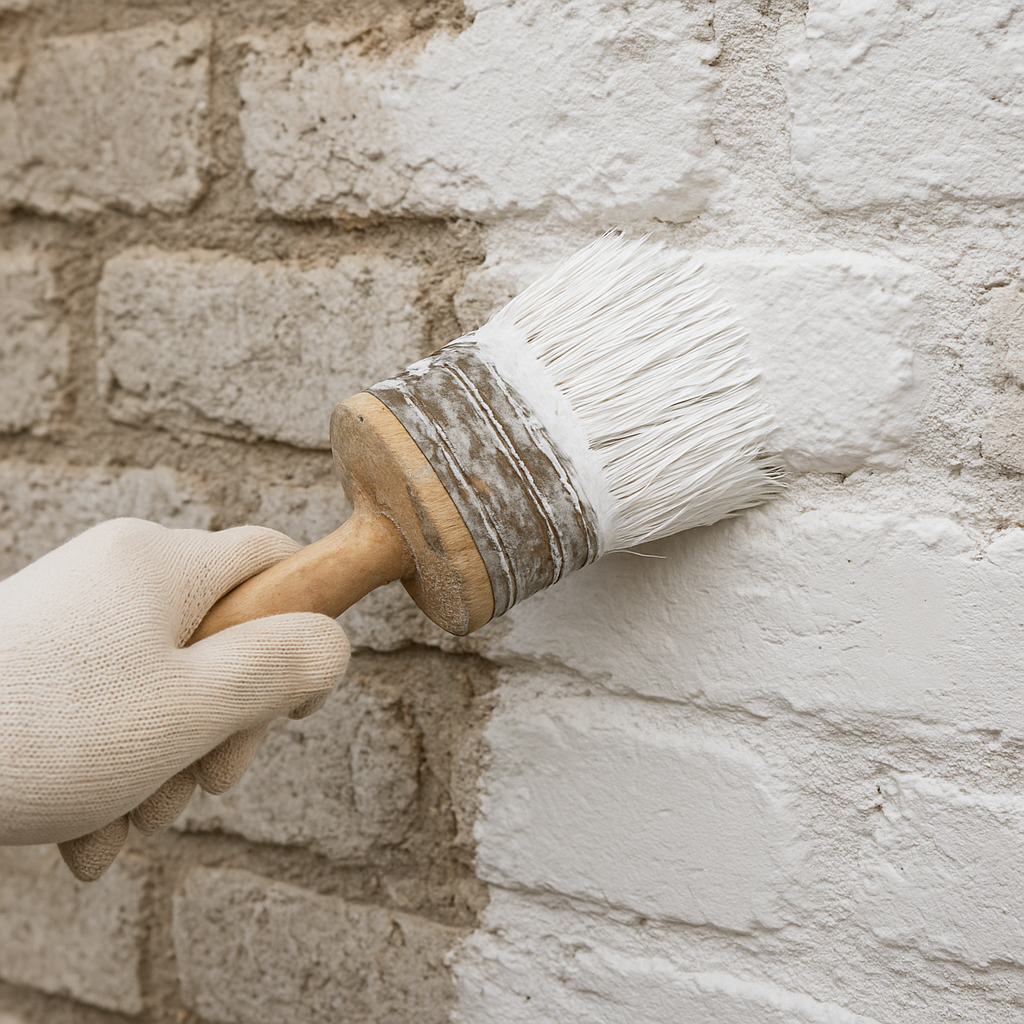
Whitewashing is a traditional method used to give walls a smooth, bright, and clean white coating. It is commonly used in homes, farms, temples, trees, and old buildings. The effectiveness of whitewash depends heavily on the type of lime used.
The lime used in whitewash is Quick Lime (Calcium Oxide – CaO). Quick lime is mixed with water to prepare slaked lime (Calcium Hydroxide), which becomes the main ingredient of whitewash.
This slaked lime creates a smooth, bright white coating that sticks well to walls and provides natural antibacterial protection.
Why Quick Lime Is Used in Whitewash
Produces a bright, pure white finish
Has antibacterial and antifungal properties
Provides a smooth coating on walls
Naturally reflects sunlight → keeps rooms cooler
Eco-friendly and non-toxic
Cheaper than modern paints
Long-lasting when applied correctly
How Lime Works in Whitewashing
Quick lime (CaO) is mixed with water.
It reacts and forms slaked lime (Ca(OH)₂).
This lime paste is diluted to make a smooth whitewash liquid.
When applied, it absorbs CO₂ from the air and becomes calcium carbonate, creating a hard white finish.
Lime Type
Scientific Name
Used in Whitewash?
Notes
Quick Lime (Correct)
Calcium Oxide (CaO)
✔ Yes
Main lime used; reacts with water to make slaked lime